Menu

 Find Your
Car
Find New
Car
Local
Pages
Find Your
Car
Find New
Car
Local
Pages
 Pakistan
 Antigua
 Anguilla
 Armenia
 Australia
 Azerbaijan
 Bahamas
 Bangladesh
 Botswana
 Burundi
 Canada
 Chile
Chile
 Costa Rica
 Cyprus
 Dominican Republic
 Fiji
Fiji
 Georgia
 Ghana
Ghana
 Guatemala
 Guyana
 Ireland
 Jamaica
 Kenya
Kenya
 Kyrgyzstan
 Lesotho
 Malawi
 Micronesia
 Mongolia
 Mozambique
 Namibia
 New Zealand
 Nigeria
 Papua New Guinea
 Paraguay
 DR Congo
 Russia
 Rwanda
 Samoa
Samoa
 Solomon Islands
 Somalia
 South Africa
 South Sudan
 Sri Lanka
 Tanzania
 Tonga
Tonga
 Uganda
 Ukraine
 USA
USA
 Zambia
 Zimbabwe
Car
Services
Company
Overview
Reviews
Blogs Categories
Help
Explore Stock
Explore Stock
Explore By Price
Explore By Price
Explore By Make
Explore by
Type
Explore by Year
Explore by
Discount
Inventory
Location
Inventory
Location
Other Categories
Other Categories
Zimbabwe
Car
Services
Company
Overview
Reviews
Blogs Categories
Help
Explore Stock
Explore Stock
Explore By Price
Explore By Price
Explore By Make
Explore by
Type
Explore by Year
Explore by
Discount
Inventory
Location
Inventory
Location
Other Categories
Other Categories

If you are buying a car in 2026, remember that it is not about appearance and speed. UK drivers look for a reliable car that gives good fuel efficiency, comes with low maintenance, and provides generous space. This is the reason why Japanese cars have no competition. Japanese brands have multiple choices, from fuel-efficient Honda Jazz to the rugged Suzuki Jimny and family-friendly Toyota RAV4 hybrid.
But not every Japanese car is worth it. Some models have issues of reliability, repair problems, or conservative technology. This gives Japanese car in UK more importance over others.
In this article, we will compare the top Japanese cars based on maintenance costs, comfort, real-world MPG, and long-term value. If you are looking for a family SUV, a city hatchback, or any road adventure vehicle, this guide has the best options for you to buy in 2026.
Japanese cars are popular because they offer reliability, excellent fuel economy, and are fun to drive. Japanese car makers manufacture the most competitive vehicles in the auto industry.
But the question here is, why is it important? Basically, selecting a car is not only about commuting from one place to another. Rather, it must fit into your daily life. The best Japanese cars in UK offer reliability, fuel efficiency, and excellent value for money as they come in smart design at a budget-friendly price.
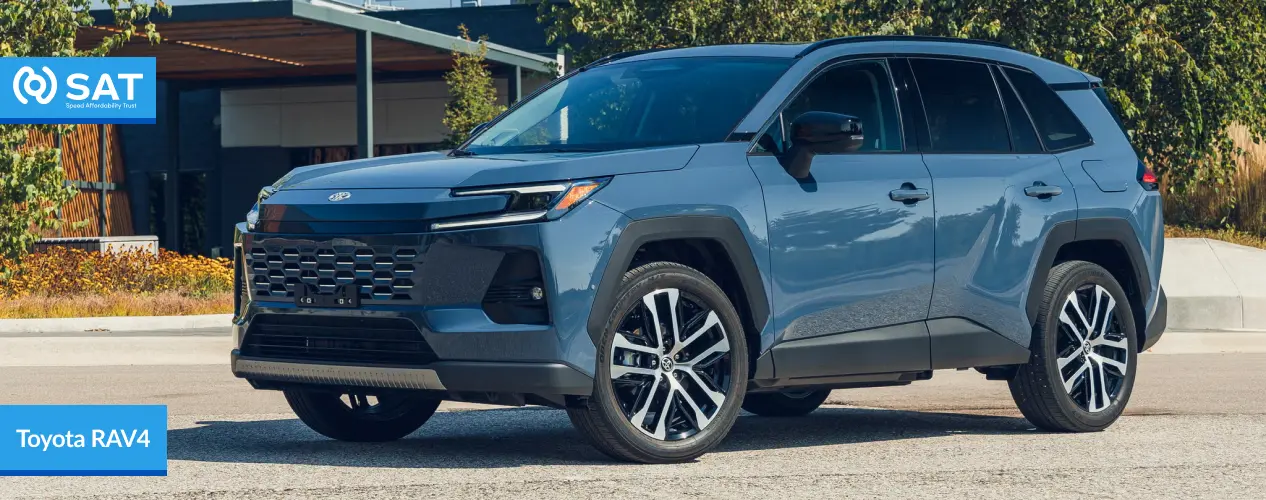
The Toyota RAV4 is on top of our list for its reliability. The vehicle is among the best affordable Japanese cars that provide exceptional fuel efficiency and are more reliable than any other model. This is not just marketing — the hybrid system genuinely delivers 48–52 MPG in real-world driving.
Older RAV4 models had a less practical cabin layout, but the new 2019 onwards models have finally rectified this with practical space that can't even be beaten by other models.
The 2.5L hybrid system of the 2020-2022 design hybrid 2WD has no overheating issues and is the most balanced option, with the best equipment combination and value.
If you can charge your car at home, the PHEV models from 2021 onwards will give you 40 miles or more of range. The 2020 PHEV launch models do not have any problems with the brakes.
When you are buying a car, always think about how good it is on fuel, how much it costs to maintain, how practical it is, and how much space it has in the boot. The Toyota RAV4 is one of the most fuel-efficient family SUVs in its class. It can do around 48 to 52 mpg on a standard hybrid, and the PHEV models can do 65 to 75 mpg on a single charge.
The cost of maintaining the car is around £180 to £220 for minor services, and for major services, which are needed every 20,000 miles, it costs around £380 to £420. It provides 580L of practical space (advertised as 490L) and space for up to 8 carry-on suitcases.
There are a few things that you must consider before buying one. Don’t buy models before 2019 because previous generations have CVT issues. You must check if the car's infotainment system is working properly. Make sure the car has the latest software updates. The current version should be 2.4.0 or higher. If you get the 19-inch wheel version, the road noise can be high. It is better to get the 18-inch wheels for a more comfortable ride.

The Honda Jazz is one of the small hatchback cars. Instead of focusing on sporty styling, the Jazz prioritises interior space and practicality. Its seats are magical, which fold flat or flip flat just like cinema seats. The hybrid powertrain achieves an average of 55-60 mpg on the real-world driving tests.
The hybrid system of Jazz Elegance e:HEV of 2022 and newer models is already a proven winner, providing heated seats and wheels, and all the tech you will use. It offers a few practical advantages and comes at an affordable price. Do not buy models before 2020, as they had touchscreen and hybrid system glitches that have been fixed in the latest models.
Honda Jazz is another one of the best budget Japanese cars that provides fuel efficiency of about 55-60 mpg in mixed driving, even in winter, while competitors fail to provide. Its maintenance is also affordable, with minor services costing £220-£270 and major services required after 12,500 miles costing £350-£400. It has a generous seating capacity, with enough space for 8 carry-on suitcases.
Before you buy the Honda Jazz, there are a few things you should think about. If you suffer from back pain, check the lumbar support before buying. If you want a more comfortable ride, get the SR trim with 16-inch wheels instead of the 17-inch wheels. It is better to use Apple CarPlay or Android Auto in the infotainment system because it is easier to use.

The Mazda CX-5 shows that Japanese SUVs are better than other SUVs in terms of quality and value. The Mazda CX-5 is better than the German brands in terms of vehicle quality at a lower price. It has physical controls, and while its naturally aspirated engines may not have headline power figures, the Mazda CX-5 offers reliable performance with turbocharged engines.
CX-5 2.0 e-Skyactiv G Centre-Line and 2020 onward models have a naturally-aspirated engine, and they come with must-have features at the lowest price. CX-5 2.2d and models from 2021 onward, with high mileage, provide impressive real-world 47-50 mpg on diesel and are much longer-lasting than their rivals.
Do not buy pre-2019 versions because they don't have the chassis tweaks and enhanced in-car entertainment of later models.
Mazda CX-5 achieves 38-42mpg (2.0 petrol) and 47-50mpg (2.2 diesel) in mixed real-world driving. It is one of the best cheap Japanese cars, with maintenance costs for minor services ranging from £190 to £220, and after 12,500 miles, a major service is required, costing between £380 and £420. Switches and controls are very reliable and don’t wear out even after 5 years.
It comes with a generous 522-litre boot space that easily accommodates eight carry-on suitcases. It has physical controls rather than a frustrating touchscreen.
A lack of low-down torque (requiring frequent downshifts in hill climbs) is one of the engine's drawbacks. Ride quality is compromised at higher trims with 19-inch wheels; stick with 17-inch wheels. Always check the rubber quality. Its infotainment system is outdated in comparison to competitors.

The Nissan Juke has become a much stronger compact crossover option in recent years. The new Nissan Juke has space, better engines, and is of better quality. While the previous one offered questionable practicality for its unique appearance, the new model brings a properly functional 422-litre boot (larger than many rival compact SUVs) and a unique styling that helps it stand out from other crossovers.
The Juke 1.0 DIG-T 114 N-Connecta and the models from 2021 onwards have a reliable petrol engine and all the necessary equipment at a good price. The manual transmission is reliable. The manual gearbox also feels smoother and more reliable than the DCT automatic. The hybrid version is more expensive.
The fuel efficiency of the Nissan Juke is 40-45mpg with the 1.0 petrol, while the hybrid's 46.5mpg is disappointing. It has enough boot space to accommodate 6 carry-on suitcases. There is a significant improvement in its interior as well. Physical climate controls protect the driver from distraction.
Before buying the Nissan Juke, you must check whether the infotainment system is responsive. Small windows make the back seats feel more enclosed than rivals.

The Suzuki Jimny offers real off-road capability that most crossovers lack. It has a proper ladder frame chassis, switchable 4WD with a low-range transfer box, and awesome axle articulation. It has gained cult status and two-year waiting lists for a good reason.
Jimny SZ5 Manual and models after 2019 provide comfort extras such as heated seats and climate control to make everyday driving more comfortable. Do not use an automatic transmission because it reduces off-road control and takes power from a limited source.
Commercial models from 2021 onwards are worth considering if you are not using the rear seats, as they are cheaper to run, with no road tax premium applied compared to the passenger version. It outperforms many larger and more expensive SUVs in real off-road conditions. Boot space is limited, providing 85 litres with rear seats up. Motorway driving is difficult at high speed, especially when there is road or wind noise.
The lack of a long wheelhouse and a 1.5-litre engine makes long motorway journeys tiring. There are some door seal problems with the early model. Limited parts. Plastics inside the car can mark easily; use protective covers for heavy use. Some early engines consume oil faster than normal, so monitor levels regularly.

Drivers in the UK looking to save on running costs without compromising on comfort will find the Toyota Corolla Hybrid one of the smartest options available. Its unique self-charging hybrid technology switches between petrol and electric power mode automatically when driving in slow traffic, which makes it ideal for commuters, where many can achieve 55 – 60 MPG in normal driving. The new 2023 models onwards feature Toyota's fifth-generation hybrid system, which is quieter, smoother, and more responsive than previous systems, but also provides up to 64.2 MPG (WLTP).
The 1.8-litre Hybrid is the most economical option for most buyers, with the 2.0-litre Hybrid ideal for those who drive frequently on motorways and prefer better overtaking ability. One of its key benefits over many competitors is Toyota's Relax program, which can extend the manufacturer's warranty period to up to a decade if the vehicle is maintained by a Toyota dealership.
When purchasing, verify that the vehicle has a complete service record from Toyota and test the infotainment system, as earlier models from 2019-2020 are dated compared with newer models. For family holidays or work trips, opt for the Corolla Touring Sports if you need more trunk space, but don't want to compromise on fuel economy. It is one of the most reliable hybrid hatchbacks in the market, and is a great long-term investment for car owners in the UK.
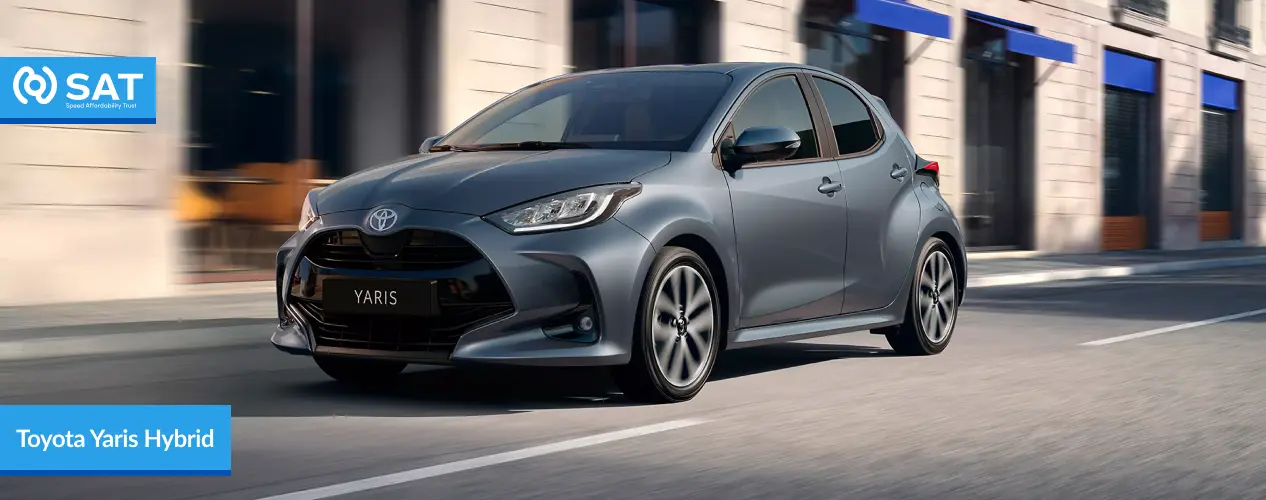
Toyota Yaris Hybrid is one of the few cars that actually save you money every time you get behind the wheel. It has been designed to be used on UK roads where short journeys, traffic lights and slow-moving queues are the norm. In such cases, the hybrid system runs more on electric power and many drivers are able to drive at 60 MPG without having to change their driving style. The official fuel economy is up to 76.3 MPG (WLTP), which is one of the most efficient self-charging hybrids available.
The 2024 facelift is the model to look for. It brought in a faster infotainment system, a faster hybrid, upgraded digital displays, and enhanced Toyota Safety Sense features. The 2021–2023 Design trim is actually the best value if budget is lower, as it has the same reliable hybrid system for less money.
When purchasing a car, ask for a complete Toyota service record to ensure that the car is still covered under Toyota's Relax warranty, which is valid for up to 10 years with annual servicing at the dealership. Many buyers don't think to request this feature either, but if done, it will provide added confidence when buying a used car, and that's the hybrid battery health check.
The only significant differences between the two are rear passenger and boot space, so if you pack with regularity for grown-up passengers or a significant amount of luggage, you will be better off with the larger Corolla Hybrid. Otherwise, the Yaris Hybrid can be one of the UK's most affordable and reliable cars to own.
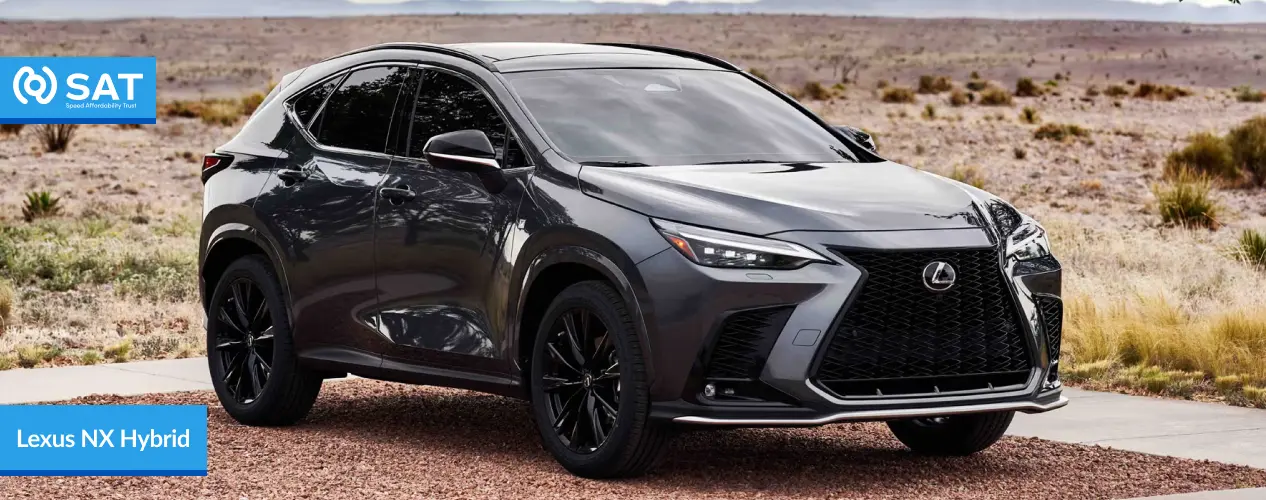
For those who prefer Toyota's reliability and yet luxury SUV comfort, the Lexus NX Hybrid is one of the best options in the United Kingdom. It is designed for motorway drivers who spend long hours behind the wheel and do not want to worry about costly repair expenses. The 2022 onwards NX 350h is the car to purchase as it offers a more powerful hybrid system, a much more advanced infotainment screen, and a far more classy driving experience than the earlier model.
In real-world driving, the NX 350h delivers an average of 44-48 miles per gallon, which is significantly less expensive to operate than many petrol-fueled German SUVs. The cabin is also one of its greatest attributes. Lexus designed controls and placed the most-used ones near the driver so that you're not looking down at the controls for too long.
One aspect that many buyers do not know is that the Lexus Warranty can be extended for up to 10 years or 100,000 miles with service at an authorised Lexus dealer. This can provide a lot of comfort if you're planning to keep the car for years.
Before purchase, verify that the latest infotainment software is up to date and listen for any interior rattles during test driving. The NX 350h is for people who primarily drive within the city limits. The NX 450h+ plug-in hybrid will only be cost-efficient if you can charge it daily at home.
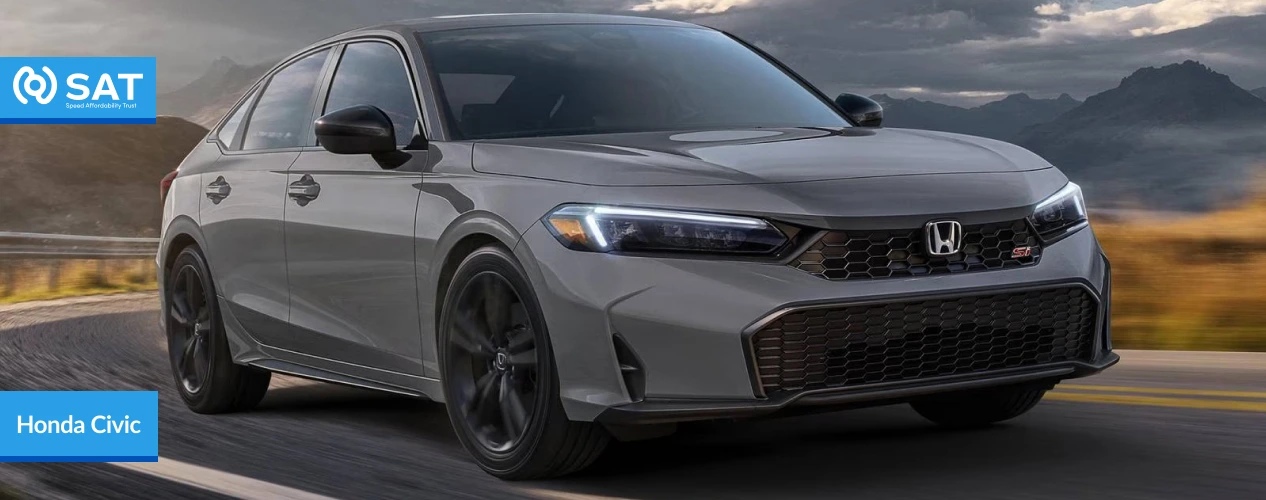
If you're looking for a family hatch that's fun to drive, the Honda Civic is the ideal pick. Unlike other hybrids, the Civic isn't just a fuel-saving vehicle; it also makes motorway manoeuvring feel smooth and confident. The Civic e: HEV is the one to purchase from 2022 onwards, as it is a 2.0-litre hybrid that offers robust performance in acceleration whilst still achieving a decent 50-56 MPG in normal driving conditions in the UK.
Many buyers don't realize one aspect of the hybrid system. The electric motor is used to power the wheels, and the petrol engine primarily provides electrical power. This gives the Civic instant responses in traffic and a more electric-car feel without requiring charging.
The Sport and Advance trims are the best value. They come with handy amenities such as heated seats, parking sensors and even wireless Apple CarPlay. The cabin also features physical controls for the climate system, which means you won't need to scroll through touchscreens while operating your vehicle.
Before purchasing, verify that the infotainment system is compatible with your mobile phone, as there have been reports of software glitches that are typically corrected by software updates. Ensure the car has an up-to-date Honda service record as well. For drivers in the UK who seek a reliable hybrid car that's easy to drive on long trips and fun on twisting roads, the Honda Civic is one of the best options.

The Mazda3 is one of the types of vehicle that can give people a shock on their first day and night behind the wheel. The Mazda3 doesn't have to rely on touchscreen technology for gadgets; it's built to put the driver first, with a luxurious cabin, supportive seats and a rotary dial that's easier and safer to use than tapping the screen while behind the wheel. It's more than a luxury car; it feels like one!
The 2021 onwards Mazda3 e-Skyactiv X is the best one to purchase. The intelligent petrol engine features Spark Controlled Compression Ignition (SPCCI) technology, a combination of diesel and petrol engine technology. For many people driving in the real world in the UK, it can achieve 45-50 mpg, particularly during long trips.
When making a purchase, verify the car has been updated with all software and recall service, since there is a software upgrade that has been applied to engine and safety systems in early models. Examine the gloss black interior trim, as well as all other interior materials, since it is the most likely to scuff upon contact with other objects.
The only giveaway is the rear passenger space, which is cramped compared to other models, such as the Honda Civic or Toyota Corolla. But for those who appreciate a car that looks the part, is quiet on the motorway and still has a sense of mystery after a few years, the Mazda3 is one of the great unknowns of the Japanese hatch in the UK.
Before importing a Japanese car into the UK, you must consider a few things.
The first thing to note is that if your car is from outside the European Union (EU), you would likely be charged a 10% Import Duty. This is based on the sum of the car's value and international shipping fees.
Second, 20% VAT has to be paid. It is applied to the price of the car, the shipping fee, and the import tax you just paid. This is usually the most significant additional expense, and it's one that you'll have to budget for. Professional vehicle importers UK can process these payments for you.
Japanese imported cars are quite popular when it comes to purchasing a car in the UK, as they are usually in good condition and offer some interesting models. It is assumed that reputable dealers who specialise in these types of cars have already gone through the import process and dealt with all UK car tax bands, IVA test, and registration.
This means that you can purchase one just like any other used car with a UK V5 logbook. This is an excellent method to obtain a distinctive vehicle without having to take care of the paperwork.
There is a lot of paperwork and regulations in the process of importing a Japanese car. That is where the services of any professional vehicle importer in the UK can be of assistance. They take care of everything, including customs forms, shipping, IVA preparation, and DVLA registration.
By using an importer service, you are certain that it is being performed properly. This professional service is crucial for many people who will pay for it just for an easy experience.
Experience the unmatched quality and reliability of Japanese engineering from SAT Japan. You can depend on it for importing high-quality used cars. We take care of all the details from the selection to registration, making the process smooth and compliant for your vehicle's arrival in the UK. You can find the SAT Japan UK office at Unit 1 Castle Park, London Road, West Thurrock, Essex, RM20 3NL for import support and vehicle sourcing assistance. Enjoy a one-of-a-kind vehicle, a safe ride, and our expertise and commitment to your satisfaction.
Japanese cars remain popular in the UK in 2026 because they offer something for every type of driver. From the fuel-saving hybrids like the Honda Jazz to the SUVs like the Toyota RAV4 to the off-roaders like the Suzuki Jimny, Japanese cars are known for being reliable, practical, and good value.
The key is to choose a car that fits your lifestyle instead of simply following trends. There are cars that are made to be comfortable and fuel-efficient, and there are cars that are made for performance and adventure. That is why it is important to look at the maintenance history, owner costs, fuel consumption, and convenience before you make a decision.
If you do some research and get the help to import a Japanese car to the UK, it can be much easier. With proper maintenance, a Japanese car can deliver years of reliable driving and strong resale value.
BYD Shark 6 Review: Specs, Range & Real-World Performance.

Top 10 Reasons Why Japanese Used Cars Dominate Globally

2025 Chevrolet Suburban: Redesign, Specs, Range, Speed

Noah Mitchell
I am Noah Mitchell, an experienced automotive journalist with over 9 years covering the dynamic world of cars and transportation. My in-depth analysis and passion for sustainable mobility drive my stories. I regularly contribute to leading publications an
Yes, Japanese import cars are popular in the United Kingdom, and this can be attributed to the fact that they are generally well-maintained, reliable, and often possess better specifications than those vehicles that are produced for sale in the UK.
Toyota RAV4 is still a popular car to buy in the UK due to its reliability, fuel economy, and low running costs.
The Nissan Skyline GT-R, Honda Integra Type R, Toyota Supra, and Suzuki Jimny are some of the most reliable, high-performance, and collectable Japanese cars to import.
While not all cars from abroad will need an IVA test, most cars under 10 years old imported from Japan are likely to need IVA approval prior to their registration in the UK.
Car imports are subject to a 20% VAT rate, plus a duty rate of approximately 10%, though some Japanese-built cars may be subject to reduced or zero-duty rates as a result of the UK-Japan trade agreements.
_1733298329.webp)
The Hyundai Palisade has been one of the most favored family cars in the petrol-head community. The Palisade has been known to blend style, efficiency, agility, and performance, all in one car. Coming in 7 different trims, with 4 diverse driving modes, this vehicle holds the solutions to all your adventure troubles, with a comfortable cabin, ample cargo space, and an innovative infotainment system. Moving into 2025, the 2025 Hyundai Palisade is introduced with some fresh updates making the SUV even more favorable for drivers.
Written below are all the incoming updates and changes to the 2025 Hyundai Palisade.
The 2025 Hyundai Palisade has a 3.8 Liter V6 engine that is paired with an 8 speed automatic transmission which delivers an output of 291 horsepower. This vehicle’s powertrain also features a manual control option for the transmission to give the driver more control. All trims come with a front-wheel drive, with an optional all-wheel drive upgrade to kick things up a notch.
The 2025 Hyundai Palisade’s 0-60 miles per hour driving time was tested to be 6.4 seconds, which is impressive for an SUV its size. Additionally, the front wheel drive Palisade has a fuel-economy of 19 mpg in the city and 26 mpg on the highway.
This three-row SUV is one of the most stylish of its kind; with a bold cascading grille, flanked by powerful and elongated LED lights, and sharp lines throughout the exterior for aerodynamic manipulation. The Palisade has a muscular stance giving it a sporty and intimidating look. The Palisade also comes with convenient exterior features such as a power liftgate, additional roof rails, folding third-row seats, and a panoramic sunroof.
The 2025 Hyundai Palisade has an opulent interior with a spacious cabin lined with the finest materials. The interior has a 12.3-inch touchscreen display featuring a dynamic digital cluster, Android Auto, Apple CarPlay, a premium sound system, dual Bluetooth connectivity, and an innovative remote controlling feature by the Hyundai Blue Link app, which gives you lock control from a distance.
The new model of the 2025 Hyundai Palisade has a starting price of $38,215 and it goes all the way up to the highest trim costing $55,515. The base trim, the SE model costs $38, 215; the second SEL model costs $40,965. The XRT trim comes in at about $44,065 while the SEL Premium trim costs $45,565. The Limited trim of the 2025 Hyundai Palisade costs $49,615 and the Caligraphy model costs $52,015. Last but certainly not least, the Calligraphy Night Edition of the Hyundai Palisade costs $55,515.
The 2025 Hyundai Palisade will be featuring 4 diverse driving modes including comfort, Eco, Sport, and Smart driving modes for an optimized and engaging drive:
Comfort: The comfort mode is set to deliver a seamless and smooth driving experience. The suspension and transmission are tuned for daily commuting driving.
Eco: The Eco mode in the 2025 Hyundai Palisade prioritizes the engine’s fuel efficiency, This mode may not deliver the most powerful performance, but the powertrain is adjusted to consume the least amount of gasoline for the more long-lasting output. This keeps the fuel economy high and decreases fuel costs.
Sport: The Sport mode focuses primarily on the speed and performance of the 2025 Hyundai Palisade. The steering and powertrain are tuned to create the maximum output while maintaining the vehicle’s agility.
Smart: The Smart driving mode is an intuitional setting that analyzes your driving style and switches the driving mode accordingly, giving you maneuverability and balance. This driving mode essentially also helps in fuel efficiency.
In comparison to other latest models, the 2025 Hyundai Palisade is relatively more affordable to maintain. The annual repair and maintenance cost for this vehicle begins at $352 and rises every year because of depreciation and can reach up to $739 in the first five years after purchase. Additionally, with high fuel efficiency, annual fuel costs are calculated to be up to $2,380 per year. All-in-all, you can rest assured that the 2025 Hyundai Palisade has a low maintenance and upkeep cost. Here are some factors contributing to this:
Hyundai Durability: Hyundai, like most other Japanese automakers, has a business model of constant improvement and innovation. These vehicles are engineered to be optimized for long-term usage. This rhombus engineering keeps your 2025 Hyundai Palisade away from the mechanic for a long while.
Expected Maintainance: You can rest assured that even if you were to take your Palisade to the mechanic, it would be out of routine, rather than from an unexpected mechanical breakdown. Routine check-ups such as oil changes and tuning will help maintain the longevity of your vehicle.
Visit Now 2025 Hyundai Elantra.
SAT Japan is the ultimate destination for those searching for well-maintained and certified Used Cars for Sale. We offer impressive deals on a wide range of luxury and economy vehicles. Our expert staff on board is dedicated to your ease and our customer-centric services will make the entire process unbelievably simpler. Our convenient services such as our insurance services, 24-month installment payment plan, and doorstep delivery, keep our customers stress-free. We recognize our responsibility to present the best course of action according to your preferences.
Although there are no revolutionary switch-ups in the design or performance of the 2025 Hyundai Palisade, it is one of the most reliable upcoming full-size SUVs in the automotive market. It is no easy feat searching through the endless sea of options to reach a final decision. Our expert staff and customer-centric services at SAT Japan help you make the right decision at every step of the purchasing process. Hence, SAT Japan is the ultimate car enthusiast website where you can find a plethora of well-maintained options for your potential next ride. Head on over to SAT Japan’s website and scroll through our vast inventory to find the perfect Hyundai car for you.

The modern cars coming in the market are capable of remarkable speeds and give you a highly smooth and comfortable experience. The latest cars are also much safer and come up with advanced and autonomous systems that can stop and steer the vehicle for you in an emergency. However, all the safety and advanced features will not do anything if you have bad tires. For example, inside tire wear is an issue that can affect the tires of many cars rolling on the road. It is not just about purchasing low-quality tires; it is also about not ensuring their proper maintenance.
Tire wear is a common problem that can affect your vehicle’s handling, safety, and performance. Although inner tire wear might seem harmless, it can lead to various serious issues, including reduced traction, poor steering response, and even blowouts.
But why do tires wear out from the inside, and how can you prevent it?
By understanding the factors that contribute to inner tire wear, you can increase the life of your tires and keep them performing at their best.
There are several reasons why your tire can wear from the inside. Below we discuss some of the reasons in detail.
Misaligned wheels can lead to irregular tire wear. When the bottom part of the tire is leaning towards the outside, it is called a negative camber. Positive camber is when the top part of the tire is leaning towards the outside.
When there is improper alignment in the tires, the inner part of the tire makes more contact with the road surface. Because of that, you might observe the inside of the front tires wearing down.
Poor wheel alignment can also mess up your camber. You can verify this by cruising on a flat section of asphalt. If your vehicle is not moving straight even after pointing the wheels at a 12 o’clock position, it means your wheels are not aligned properly.
Driving your vehicle aggressively puts a lot of stress on your tires. It can also overheat various components of the tires and wear the thread at a faster pace because of abrasion. Aggressive riding includes running your vehicle at maximum acceleration, hard cornering, and pushing brakes for prolonged periods. Tire wire showing is an indication of your tires being severely damaged.
It is essential to note that, unlike race cars, standard vehicles are not designed to be driven aggressively all the time. The tires in race cars are specifically designed to give maximum gain and resolve steering on the road. However, other tires cannot keep up with constant beating from drifting and fast driving.
For more insights into premium tire options, check out our detailed comparison: Bridgestone vs. Michelin Tires.
The suspension components of a vehicle are designed to not only absorb road shocks and vibration but also to make sure that the vehicle’s shock ride height remains the same. It is important because camber angles are directly affected by it, and it can increase inside tire wear.
Suspension components such as springs can sag through regular use. Faulty or defective springs fail to absorb shocks and vibrations, which can damage other suspension components of the vehicle as well.
Also, the defective spring can lower the vehicle’s stock ride height, which can change the camber angles.
These components are made of rubber or elastomer and serve to link the chassis and steering knuckles. These bushings eliminate excess free movement within the vehicle, which can have a negative effect on camber angles. As a result of frequent use, the control arm bushing wears down gradually, leading to increased movement and more tire wear on the inside.
It is crucial to fix the inner tire wear to avoid further damage to the vehicle’s components, such as ball joints and springs, and ensure more safety.
Get your wheel balanced after every one or two years. If you have installed new tires in the vehicle, you should get them balanced immediately to protect them from wearing out.
If you notice uneven tire wear, check your suspension system. Damage to the suspension system can accelerate the inner tire wear, resulting in future problems such as a decrease in vehicle speed and expensive repairs.
Innerwear on tires occurs when the driver does not maintain their tires regularly. Just like your vehicle, your tires require extra care to give you a safe ride.
Regularly check the tire pressure of your vehicle. It is an important practice because understated tires can cause the sidewall to flex, which can lead to instability at higher speeds. Also, underinflation can cause other problems, including cracked rubber, tread separation, bulges, and more. If the tires are overinflated, they can bulge in the center, causing increased wear in that area.
Therefore, it is preferable to check the tire pressure once every month, especially after large temperature changes.
If you notice damage on any of the suspension components, it is important to get your vehicle inspected by a professional mechanic. Doing that will resolve the issue and your car will also stay safe.
Tire wearing on the inside can also occur as a result of overloading. It is important to adhere to the vehicle weight limits mentioned by the manufacturers. Overloading includes passing extra passengers, carrying excessive cargo, or towing large tailors, which can put stress on the components of the tire.
Tires wearing on the outside and inside can seriously affect the handling and safety of your vehicle. You can avoid internal tire damage with a routine inspection of your suspension system and alignment and by taking proper care of your tire. It is also important to get your vehicle inspected by a professional mechanic every once in a while.

There are a lot of parts that go into making your vehicle run fast and look its best. The engineers have spent years and years tuning car emission systems to personalize the sound a vehicle makes when it’s on the road. However, when it comes to riding, not everyone wants to have a quiet ride, and for that, you can modify your vehicle’s straight pipe exhaust system and alter the sound your engine produces.
A very exciting modification for car owners currently is the straight exhaust system, particularly for people who want to improve the performance of their ride. One reason car owners choose it is its greater functionality in compression compared to stock exhaust. The reduced backpressure supports greater functionality, resulting in increased engine performance.
If you are wondering if a straight-pipe exhaust system is right for you, keep reading to learn the pros and cons of installing one in your vehicle.
Straight pipe exhaust is becoming one of the most common modifications among car fans who enjoy the roar of their engine along with the additional power of their vehicles. Unlike standard exhaust systems, straight-pipe exhaust systems do not have a resonator, muffler, or catalytic converter. You can witness this type of exhaust in racing cars and other high-performance vehicles.
The exhaust system allows the fumes to flow freely from the engine’s exhaust headers, allowing them to go into the atmosphere directly through the exhaust tip. They increase the horsepower of your engine because there are no restrictions on the exhaust, and the gases to flow freely.
Explore our in-depth guide on the straight pipe exhaust system to enhance your car's performance and sound quality.

There are many reasons for considering a straight pipe exhaust for your vehicle, including:
Increased Performance
The prime reason why many people choose straight pipe exhaust is because these systems increase your vehicle’s horsepower and torque. These systems also reduce the back pressure from the engine, allowing the exhaust gases to move freely and assisting the engine to perform without any hindrances. This mode is particularly designed for sports vehicles as it does not hinder gas flow and enhances the car’s performance.
Engine’s Original Sound
The straight pipe lets the true sound of the engine come out. Normally, there are mufflers, catalytic converters, resonators, and other similar components present to reduce the sound of the engine. However, straight pipe exhaust allows the raw and pure sound of the engine to come out.
Less Weight
When a vehicle’s weight is reduced, it becomes faster and more efficient. Mufflers and catalytic converters weigh a lot, and if you love racing, you surely would want to have a lighter vehicle. A straight pipe exhaust weighs much less than the original exhaust.
Aesthetic Appeal
Straight pipes also give an aesthetic look to your vehicle and make it stand out. To make the vehicle look more appealing, you can apply a chrome finish to the exhaust tip. To give additional colors to the tip, various types of welding methods are used. You can even go for a twin-pipe setup for even better aesthetics.
Remarkable Fuel efficiency
Without mufflers and a catalytic converter, the engine creates low back pressure, leading to better combustion. This also means lower fuel consumption.
Straight-pipe exhaust systems also have their own cons, including:
Rampant Emissions
It’s true that straight pipes make a remarkable sound, but they are not great for the environment. In the late 20th century, catalytic converters came into the market to control the harmful gas emissions from cars into the environment. Removing catalytic converters can be really bad for the environment.
Expensive
Installing straight pipes can be expensive. New pipes are not cheap, and finding them at a good price is not easy, so most car enthusiasts go for custom-built exhaust pipes. Also, after installing a straight pipe exhaust system, you have to tune your car according to certain standards to get the most out of it.
It Might Not be Legal
Modifying a vehicle to a straight-pipe exhaust system and removing mufflers and catalytic converters is not legal in many states in the US. However, it varies from state to state. Therefore, before installing an exhaust pipe in your exhaust, you should go through your state’s rules.
Effects Resale Value
Customizing your vehicle can also make it harder to sell it at a high price in the future. An average buyer might not find pipe exhaust to be as valuable as you do. So, you might be forced to spend extra money on reinstalling a standard exhaust system or accept a low price when selling your vehicle.
The total cost of pipe exhausts depends on various factors, including the model of the vehicle, the materials used, and the length of the exhaust. Overall, you might have to pay around $200 to $1000 with a labor cost of about $100 to $600.
Keep in mind that depending upon the customization and the mechanic, the cost can go much higher. Generally, it is preferable to get quotes before choosing a professional.
Subscribe to SAT Japan to get all the latest car news, tips, and tricks for a smooth ride.